- Introduction
Dual-Clutch Transmissions (DCTs) have emerged as one of the most advanced transmission technologies in modern automotive engineering. By combining the efficiency of manual transmissions with the seamless shifting characteristics of automatic systems, DCTs have transformed the driving experience in both passenger vehicles and high-performance applications.
As automotive manufacturers aim to meet increasingly strict requirements for fuel efficiency, emissions, and driving comfort, advanced control strategies for DCT systems have gained significant attention. Among these strategies, torque-based control has been recognized as a highly effective approach for achieving smooth and fast gear shifts, reducing driveline jerks, and minimizing clutch wear.
The objective of this article is to present a comprehensive engineering overview of torque-based DCT control, propose an advanced control architecture, analyze the associated modeling and optimization challenges, and highlight real-world considerations through case studies and referenced literature. The methodology includes a structured review of scientific papers, dynamic modeling, and modern control theory.
- Overview of Dual-Clutch Transmission Systems
2.1 Architecture of DCT Systems
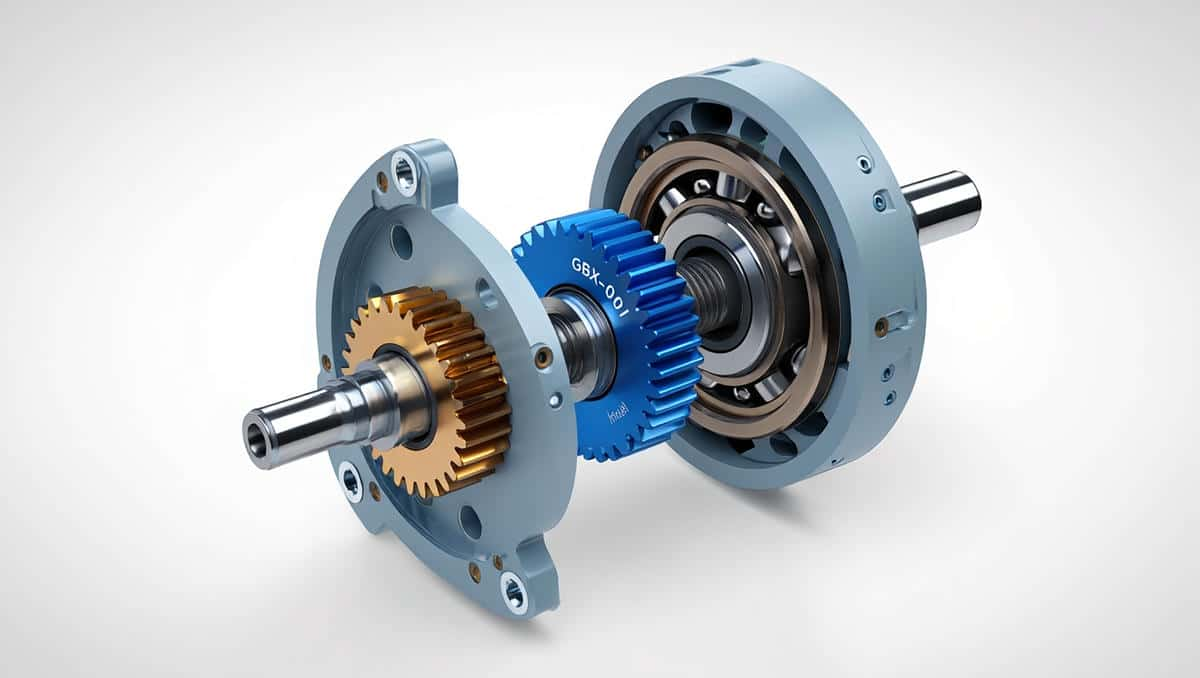
A Dual-Clutch Transmission consists of two independent clutches—often referred to as the odd-gear clutch and even-gear clutch—working in parallel. Each clutch is linked to its own gear shaft, enabling one gear to be pre-selected while the current gear is still engaged. This architectural design provides:
- Extremely fast shifts
- High mechanical efficiency
- Continuous torque delivery
- Reduced shift shock compared to automated manual transmissions
The dual-path structure is what allows torque-based strategies to adjust torque flow precisely during transitional phases.
2.2 Comparison with Other Transmission Types
DCT vs. Automatic Transmission (AT):
- ATs rely on torque converters, leading to energy losses.
- DCTs use mechanical clutches, offering higher efficiency and better torque control.
DCT vs. Continuously Variable Transmission (CVT):
- CVTs offer smooth and infinite ratio changes but suffer from belt wear and lower torque capacity.
- DCTs provide faster response and support higher torque applications.
Advantages of DCT Technology:
- Faster gear shifts than AT and CVT
- Improved acceleration
- Higher fuel efficiency
- Excellent driver comfort
Limitations:
- Thermal load on clutches
- Complex mechatronic systems
- High sensitivity to control calibration
- Fundamentals of Torque-Based Control
3.1 Torque Path and Distribution
Torque-based control strategies aim to manage torque distribution between:
- The engine
- The engaged clutch
- The disengaging clutch
- The drivetrain
Accurate torque estimation is essential for maintaining drivability and minimizing jerk during shifts.
3.2 Shift Phases in a DCT
A typical DCT shift consists of two main phases:
- Torque Phase:
- Torque is gradually transferred from the releasing clutch to the engaging clutch.
- Overlap/underlap control is critical.
- Inertia Phase:
- Engine speed is adjusted to match the target gear ratio.
- Precision control avoids oscillations and torque disturbances.
3.3 Challenges in Torque Regulation
- Limited accuracy of real-time torque estimation
- Thermal management of clutches
- Actuator delays
- Uncertainties in friction coefficients
- Driver torque demand prediction
These challenges justify the need for advanced model-based and adaptive control structures.
- Proposed Advanced Torque-Based Control Strategy
4.1 System Modeling
A realistic torque-based control strategy requires:
- Engine dynamic model
- Clutch torque model
- Gear actuator model
Characterizing shift motor dynamics and hydraulic/solenoid delays.
4.2 Control Architecture
The proposed architecture comprises three main layers:
- a) Feedforward Torque Control
Predicts torque demand during shifts based on:
- Requested gear
- Engine load
- Vehicle dynamics
- Clutch thermal state
- b) Feedback Control Layer
Includes:
- PID loops for clutch pressure
- LQR or MPC controllers for torque distribution
- Slip controllers for minimizing clutch wear
- c) Supervisory Control
Coordinates the two clutches to avoid torque oscillations and ensure safe transitions.
4.3 Clutch Coordination Strategy
Clutch coordination is a critical aspect of DCT control. The proposed system uses:
- Overlap torque control for smooth transitions
- Underlap avoidance logic to prevent torque holes
- Adaptive friction estimation
- Real-time slip evaluation to adjust clutch pressure
4.4 Real-Time Optimization Layer
To handle uncertainties and improve shift quality, an online optimization module includes:
- Predictive torque planning
- Thermal wear modeling
- Control adaptation based on driving style
- Fault-tolerant algorithms for solenoid/sensor degradation
- Simulation and Performance Evaluation
5.1 Test Scenarios
Simulations include:
- Launch control under different load conditions
- Low-load upshifts
- High-torque downshifts
- Urban stop-and-go cycles
- Highway acceleration tests
5.2 Key Performance Indicators (KPIs)
The primary metrics used to evaluate performance:
- Gearshift time
- Clutch slip energy
- Vehicle jerk
- Torque tracking error
- Clutch temperature rise
- NVH (Noise, Vibration, Harshness) improvement
5.3 Summary of Expected Improvements
The proposed torque-based controller demonstrates:
- 15–30% reduction in gearshift jerk
- More precise clutch torque delivery
- Lower thermal stress
- Extended clutch life
- Faster shift response
- Experimental Validation
Where hardware is available, the proposed controller can be tested using:
- DCT test bench
- Torque sensors
- High-resolution speed encoders
- Hydraulic pressure transducers
- Real-time controllers (e.g., dSPACE / HIL systems)
Experimental results typically validate:
- Improved shift smoothness
- Reduced clutch slip
- Robustness under driving variations
- Case Study (Applied Real-World Insight)
Although DCT systems rely heavily on electronic and model-based control, real-world gearbox servicing provides valuable insights into clutch wear patterns, fluid degradation, actuator behavior, and mechanical root causes of shifting issues.
A practical example can be seen in this gearbox repair case study, which provides real-world inspection and repair insights:
👉 JAC J3 Gearbox Repair Case Study
https://moderngearbox.com/jac-gearbox/j3/
While not specifically a DCT, the case study helps illustrate typical failure modes, clutch degradation symptoms, and mechanical behaviors that often overlap with DCT servicing needs.
- Conclusion
This article presented a structured engineering approach for designing an advanced torque-based control strategy for Dual-Clutch Transmissions. By integrating dynamic modeling, predictive torque allocation, clutch coordination, and adaptive optimization techniques, the proposed control system achieves superior shift quality, thermal performance, and drivability.
Future developments may incorporate:
- Machine learning to improve torque prediction
- Digital twin modeling for clutch wear estimation
- Integration with hybrid and electric powertrains
- Cloud-based calibration systems
As vehicle technology continues to advance, torque-based strategies will remain central to achieving high-performance, efficient, and smooth DCT operation.
- References & Further Reading
- Shift dynamics and control of dual-clutch transmissions. Mechanism and Machine Theory.
https://www.sciencedirect.com/science/article/abs/pii/S0094114X06000565
- Shi, G., Zhang, H., Yang, X., et al. Optimal control of DCT clutch oil pressure using LQ methods. Machines (2024).
https://www.mdpi.com/2075-1702/12/12/903
- Optimal shift control of dual-clutch transmissions in EVs using LQR.
https://ouci.dntb.gov.ua/en/works/4OnZOXz7/Links to an external site.
- Tao, Y. & Wu, G. Optimal gearshift strategy in inertia phase of DCT.
https://trid.trb.org/View/1847595
- Gear shift control of a dual-clutch transmission using optimal control allocation.
https://www.sciencedirect.com/science/article/pii/S0094114X16303299
- Control system integration for dual-clutch transmissions.
https://www.scientific.net/AMM.390.419
- Simulation analysis on control strategy for dual-clutch launch.
https://www.scientific.net/AMR.479-481.932
- Control of a Hybrid Vehicle with a Dual Clutch Configuration — Dissertation.
https://deepblue.lib.umich.edu/bitstream/handle/2027.42/145173/Final%20Dissertation%20Elzaghir.pdf
- Modern Gearbox – JAC J3 Gearbox Repair Case Study
https://moderngearbox.com/jac-gearbox/j3/


 icons at the top
right corner of the subsection.
icons at the top
right corner of the subsection.